

Hialeah, Florida, is experiencing notable shifts in its real estate market, characterized by evolving home values, rental trends, and significant new developments.
Current Market Trends
As of April 2026, the average home value in Hialeah stands at $444,086, reflecting a 2.6% decrease over the past year. Homes typically go pending in approximately 53 days, indicating a moderately paced market. The median sale price is $455,833, with a median list price of $486,333, suggesting a slight gap between seller expectations and buyer offers. Notably, 14.8% of sales have closed above the list price, highlighting competitive segments within the market.
Rental Market Dynamics
The rental landscape in Hialeah mirrors national trends, with the average rent at $2,423 as of April 2026. This figure represents a 1% decrease year-over-year, offering some relief to tenants. The national average rent during the same period is $1,930, positioning Hialeah’s rental market as relatively higher-priced but showing signs of stabilization.
Upcoming Developments
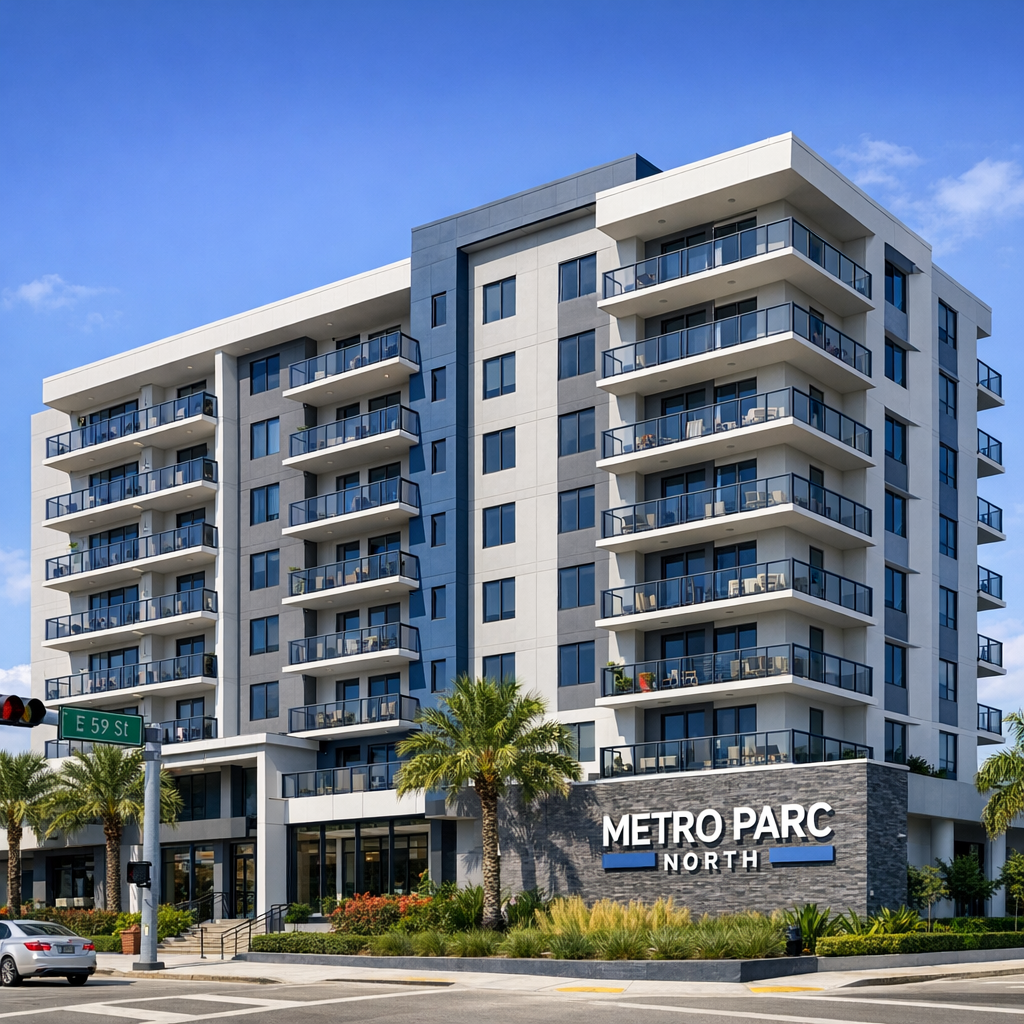
Significant developments are underway, poised to reshape Hialeah’s housing options. Metro Parc North, a 661-unit rental development by Baron Property Group, has recently topped out at 955 East 26th Street. Designed by Modis Architects, this project is part of a larger mixed-use complex adjacent to the Metrorail entrance and Hialeah Hospital. Completion is anticipated in late 2027, offering modern, transit-oriented living with amenities such as a resort-style pool, coworking spaces, and 24-hour concierge service.
Additionally, the broader Metro Center project, a $600 million initiative, aims to introduce nearly 1,600 apartments within walking distance of the Metrorail and Tri-Rail Transfer Station. This development underscores a commitment to enhancing connectivity and providing attainable housing options for the community.
Conclusion
Hialeah’s real estate market is in a state of transformation, with declining home values, a stabilizing rental market, and substantial new developments on the horizon. These changes present both challenges and opportunities for residents, investors, and prospective homeowners navigating the evolving landscape.